labdanum Collection
Sises Rethimno Crete. Northern Crete (The only place today).
HTML labdanum resin
Cistus Incanus.
Cistus Incanus from Crete- The plant.
6.11.11
CISTUS CRETICUS SPP. CRETICUS
| Cistus Creticus/Incansus. |
What Is Cistus Incanus?
Cistus incanus, or pink rock rose, is a low-growing flowering shrub with pink flowers that belongs to the family Cistaceae. It is sometimes known as Cistus creticus. Pink rock rose has other names in various regions of the world, including rock rose, hairy rock rose, and soft-hairy rock rose. It is native to southern Europe and the area around the eastern Mediterranean but has been transplanted to and naturalized in other areas of the world, such as California in the United States.
This plant and at least one other closely related species have been prized since ancient times as the source of the substance labdanum, also known as ladanum. This sticky resin, derived from the sap of Cistus incanus has been used for centuries as an ingredient in perfumes and incense. Today, it is still a popular and important component of many perfumes, scented soaps and bath products, and flavorings for candies and other foods.
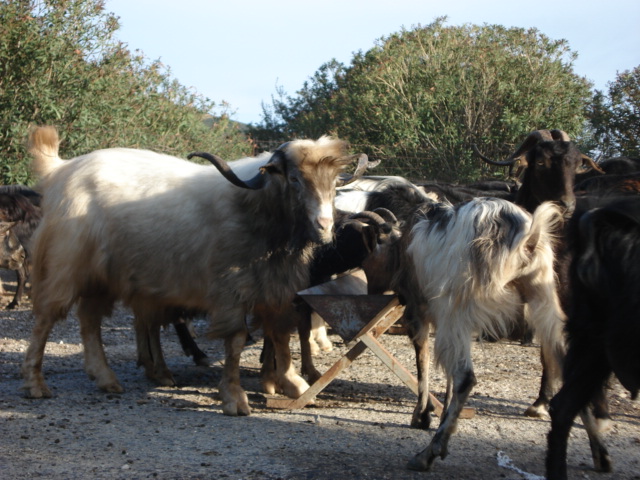
Ancient peoples used a unique method for collecting the resin from these plants. Goats were allowed to graze among the Cistus incanus shrubs, and the resin would adhere to the hair of their coats, which was then shorn and boiled. The resin, which is not soluble in water, would eventually rise to the surface and would be skimmed off for later use. This complex and time-consuming process made labdanum a rare and highly prized commodity among ancient peoples. Today, modern techniques have made this process much more efficient.
Gardeners and landscapers favor the pink rock rose for its beauty and toughness. Cistus incanus is known for its ability to thrive in poor soils and in dry conditions. Its roots are known for being very resistant to fire, and it is often one of the first plants to sprout anew after fire destroys the vegetation in an area where it grows. It prefers uncultivated soils and does not require much water.
Pink rock rose flowers have five petals surrounding a center of bright yellow. The petals, which may range in color from deep pink to pale pink, purple or even white are usually wrinkled in appearance. Its foliage, traditionally used to make tea in some regions of Greece, is often described as hairy or fuzzy and is covered with fine, soft hairs.
Cistus incanus makes a good ground cover, as it will gradually form a thick, lush layer that bears pink flowers in great numbers in the spring. As an evergreen, its attractive foliage can be enjoyed year-round. It will not tolerate extreme cold and only grows in areas where winter temperatures do not drop below 10 Fahrenheit (about -12 Celsius).
This plant and at least one other closely related species have been prized since ancient times as the source of the substance labdanum, also known as ladanum. This sticky resin, derived from the sap of Cistus incanus has been used for centuries as an ingredient in perfumes and incense. Today, it is still a popular and important component of many perfumes, scented soaps and bath products, and flavorings for candies and other foods.
Ancient peoples used a unique method for collecting the resin from these plants. Goats were allowed to graze among the Cistus incanus shrubs, and the resin would adhere to the hair of their coats, which was then shorn and boiled. The resin, which is not soluble in water, would eventually rise to the surface and would be skimmed off for later use. This complex and time-consuming process made labdanum a rare and highly prized commodity among ancient peoples. Today, modern techniques have made this process much more efficient.
Gardeners and landscapers favor the pink rock rose for its beauty and toughness. Cistus incanus is known for its ability to thrive in poor soils and in dry conditions. Its roots are known for being very resistant to fire, and it is often one of the first plants to sprout anew after fire destroys the vegetation in an area where it grows. It prefers uncultivated soils and does not require much water.
Pink rock rose flowers have five petals surrounding a center of bright yellow. The petals, which may range in color from deep pink to pale pink, purple or even white are usually wrinkled in appearance. Its foliage, traditionally used to make tea in some regions of Greece, is often described as hairy or fuzzy and is covered with fine, soft hairs.
Cistus incanus makes a good ground cover, as it will gradually form a thick, lush layer that bears pink flowers in great numbers in the spring. As an evergreen, its attractive foliage can be enjoyed year-round. It will not tolerate extreme cold and only grows in areas where winter temperatures do not drop below 10 Fahrenheit (about -12 Celsius).
The plant Cistus Creticus spp. Creticus belongs in the family Cistaceae and is synonym:
1. Cistus Incanus.
2. Cistus Villosus.
3. Cistus Polymorphus.
Labdanum from cistus creticus is the myrrh Old Testament.
![]() |
| "The Adoration of the Magi" El Creco Dominikos Theotokopulos(He comes from area of labdanum). |
Myrrh is mentioned in the Bible (Psalm 45:8; Song of Solomon 4:14) and is believed to have been a mixture of myrrh and the oleoresin labdanum. One of the three gifts the Magi brought to Jesus Christ (Matthew 2:11) was myrrh. Myrrh gum resin was also used as a stimulant tonic and is even used today as an antiseptic in mouthwashes as well as to treat sore gums and teeth.
5.11.11
AREA OF LADANUM
| Sises Rethimno Crete Greece Mediterranean Europe. |
| Area in Northern Crete |
Sises is a village in northern Crete where there is produces ladanum only of all the world with the following characteristics:
1. Labdanum or ladanum produces from the plan Cistus Creticus.
2. Also It produces with an ancient and traditional way.
Labdanum or ladanum from this plan (Cistus Creticus) and with the impressing traditional method of produce has THE BEST quality.
It exists in the Municipality Milopotamoy and the Municipality Malebizioy.
2. Also It produces with an ancient and traditional way.
Labdanum or ladanum from this plan (Cistus Creticus) and with the impressing traditional method of produce has THE BEST quality.
It exists in the Municipality Milopotamoy and the Municipality Malebizioy.
4.11.11
LADANUN OR LABDANUM FROM CISTUS CRETICUS SPP. CRETICUS
"In ancient times the valuable aromatic gum ladanum was gathered manually from Cistus creticus subsp. creticus, especially in Crete and Cyprus. The gum is exuded from glandular hairs on the leaves and young stems, especially under hot sunshine. It was gathered by allowing goats to graze on and among the plants; the ladanum adhered to their beards, which were then cut off. Alternatively a device called a ladanisterion or ergastiri, with long thongs of leather, was drawn over the plants by hand during the hottest part of the day, when the ladanum was at its runniest and stickiest.. The leather thongs became caked with ladanum, which was then scraped off and formed into lumps of various shapes. A very small amount of ladanum is still gathered in this traditional way in a small area surrounding a village in northern Crete."
http://www.cistuspage.org.uk/perfumery.htm
29.9.11
The collection labdnum is really difficult work.
The collection labdnum, with the old ancient way, is really difficult work. It becomes under boiling hot helium of summertime.
Period of collection: MAY - AUGUST
Conditions of collection: sunlight with temperature above 30 C and it prevails stillness.
The microclimate of region of village Sises Rethimno is the mainer reason that prevails still this way in this point from the all world.
6.9.11
Tool of the ladanum or labdanum (ladanesterion).
1.Tool 1700 just as Joseph Pitton de Tournefort
The tool was constituted by leather leads by the season of Pedanios Dioskurides 1 century AC. and in order that describes the French botanist in his travel in Crete in 1700.
2.Tool today .
The tool was constituted by leather leads by the season of Pedanios Dioskurides 1 century AC. and in order that describes the French botanist in his travel in Crete in 1700.
| Today. With labdanum. |
2.Tool today .
Today they have been replaced with plastic.
Weight : 2-4 Kgr.
Weight : 2-4 Kgr.
10.8.11
GATHERING IN FOTO
![]() |
| Sises Rethimno |
| Cistus Creticus |
In Sises exist big regions, where they flourish exclusively Cistus Creticus. ONLY THOSE THAT HAVE MAUVE flowers, produce labdanum. This regions are named labdanum place.
In the dues of roughly May each year, as soon as it begins that is to say the heat of summertime, Cistus Creticus are ready in order to begins the meditation labdanum. In order to we collect the labdanum from plant, we use a ladanesterio, a manufacture by timber that above we have tied up her plastic leads. Striking these leads on t o plant, plastic gathers the “sweat of” seces. This sweat when congeal and it becomes black.
In order to it is gathered labdanum it should it makes heat and it has sunlight. When it is gathered labdanum by a plant, is needed one-one-two days in order to introduce the characteristic sweat, that is to say the liquid of Cistus Creticus that is become labdanum. The work of meditation labdanum is very tedious and laborious, because labdanum men it should it goes up and down in the mountains in the heat and in very big temperature.
After finish the meditation labdanum and the light blue leads of a ladanesterio, they have blackened, that is to say the sweat of Cistus Creticus it has congeal then it should we take from the leads labdanum. Consequently we leave ladanesterio, enough hour under the sun in order to become soft the black pastry that is found on the leads.
The last stage of meditation labdanum is we take him above the ladanesterio. With the labdanum men we tighten lead and pulling, we gather labdanum. When it passes few hour the material that we gather, it becomes In order to we clean strap of ladanesterio and we gather labdanum, we use labdanum men. Labdanum men usually is combination from two locks.
14.7.11
Labdanum. Menu.
| Cistus Creticus Incanus |
| Goats with labdanum |
In ancient times, the resin was scraped from the fur of goats and sheep that had grazed on the cistus shrubs. It was collected by the shepherds and sold to coastal traders. The false beards worn by the pharaohs of ancient Egypt were actually the labdanum soaked hair of these goats. Later long poles with leather or cloth strips were used to sweep the shrubs and collect the resin which was later extracted. It was used to treat colds, coughs, menstrual problems and rheumatism.
http://en.wikipedia.org/wiki/Labdanum
Labdanumaus Wikipedia, der freien EnzyklopädieWechseln zu: Navigation
Ladanum oder Laudanum ist ein Harz, das im Mittelmeergebiet aus verschiedenen Arten von Zistrosen gewonnen wird. Im Sommer tritt unter Sonneneinwirkung das ölige Harz aus den Blättern und Zweigen, als würde die Pflanze schwitzen.
Schon im Alten Ägypten war Labdanum sehr beliebt. Das Harz wurde unter anderem auch als Räucherwerk verwendet. Wegen seines ambra-artigen, balsamischen, trocken-holzigen Duftes wird es heute auch als Rohstoff für die Parfumindustrie verwendet.
Die Bezeichnung Labdanum hat ihren Ursprung im syrisch-phönizischen Sprachraum. Dort wurde die Pflanze als "Ladan" (klebriges Kraut) bezeichnet. Es wurde zur Schönheitspflege sowie als Heilmittel benutzt.
In der Antike wurde vor allem das Harz der Kretischen Zistrose (Cistus creticus) verwendet. Zu dieser Zeit wurden zur Gewinnung des Harzes Ziegen durch die Sträucher getrieben. Anschließend wurde das an den Haaren klebengebliebene Harz herausgekämmt und zu Klumpen gepresst.
Heute wird es meist aus der Lack-Zistrose (Cistus ladanifer) gewonnen. Diese produziert bedeutend mehr Harz und kommt nur im westlichen Mittelmeergebiet (Südfrankreich, Spanien, Portugal, Marokko) vor.
Auch in der Bibel wird es erwähnt (Gen 37,25 EU, Gen 43,11 EU)
http://de.wikipedia.org/wiki/Labdanum
LADANUM
Gomme résine aromatique fournie par quelques plantes et principalement par le ciste de Crète. Les Égyptiens récoltent le ladanum en frappant l’arbrisseau avec des lanières de cuir. La masse noire et visqueuse ainsi recueillie est employée en médecine comme stimulant ainsi qu’en parfumerie.
12.7.11
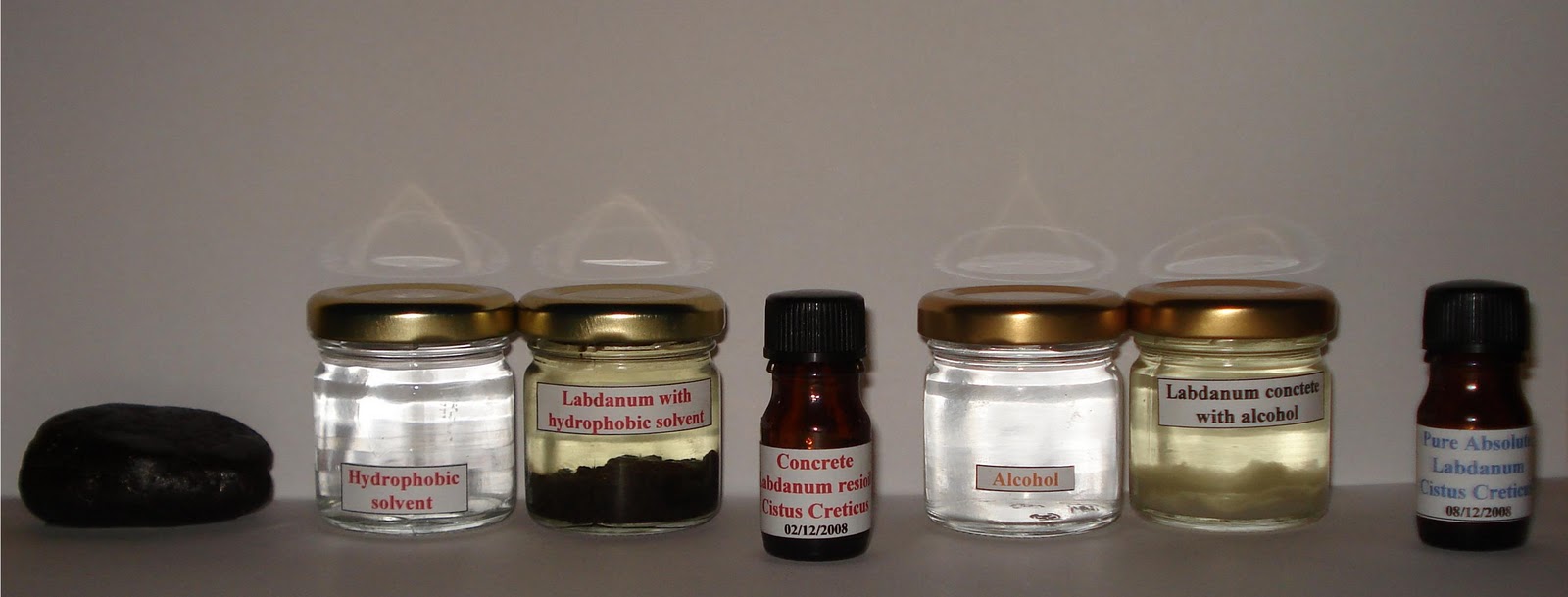
Products 1. Labdanum resin 2.The first time Labdanum concret - labdanum absolute and 3. Solutions (labdanum from Cistus Creticus)
A. Labdanum resin is a natural product.
The First Time
CO2 extracted oils are high quality oils extracted using carbon dioxide in liquid form, as the solvent. When carbon dioxide is converted to liquid by using low temperatures and high pressure, it becomes a very safe and effective solvent that allows all the desireable active constituents of a plant to be collected without the risk of heat degradation. Once the extraction is complete, the carbon dioxide is allowed to go back to its natural gaseous state, leaving behind only the extracted essence of the plant. CO2 extracted oils are the closest representation of the natural plant ever achieved.
Two types of oils are obtained using this method of extraction:
CO2 Selects:
Selects are oils which are extracted at lower pressures and contain only the volatile, CO2 soluble components. The heavier waxes, resins, and color compounds are left behind. The viscosity of a select oil is generally thick but pourable. These oils closely resemble steam distilled oils in composition, however, they may contain more volatile components that are not extracted during steam distillation.
CO2 Totals:
Totals are oil that are extracted at higher pressures and contain both the volatile and non-volatile CO2 soluble components of a plant. These oils contain the essential oil of the plant plus the heavier waxes, resins, color compounds, making them very similar to the plant itself. CO2 totals are generally thick and pasty but are soluble in essential oils and vegetable oils (although some may need gentle warming).
| All products of Cistus creticus & labdanum |
The First Time
B)Labdanum concrete – Labdanum absolute. Solvent extraction.
Labdanum from Cistus Creticus.
a.Method working: Solvent extraction.
Method steps : two.Product: Labdanum concrete – Labdanum absolute.
The first step:
Α solvent such as hexane or supercritical carbon dioxide is used to extract the oils. Extracts from hexane and other hydrophobic solvent are called concretes, which is a mixture of essential oil, waxes, resins, and other lipophilic (oil soluble) plant material.
The second step:
Prep for all highly fragrant, concretes contain large quantities of non-fragrant waxes and resins. As such another solvent, often ethyl alcohol, which only dissolves the fragrant low-molecular weight compounds, is used to extract the fragrant oil from the concrete. The alcohol is removed by a second distillation, leaving behind the absolute.
b.Modern method : CO2 Extraction
CO2 extracted oils are high quality oils extracted using carbon dioxide in liquid form, as the solvent. When carbon dioxide is converted to liquid by using low temperatures and high pressure, it becomes a very safe and effective solvent that allows all the desireable active constituents of a plant to be collected without the risk of heat degradation. Once the extraction is complete, the carbon dioxide is allowed to go back to its natural gaseous state, leaving behind only the extracted essence of the plant. CO2 extracted oils are the closest representation of the natural plant ever achieved.
Two types of oils are obtained using this method of extraction:
CO2 Selects:
Selects are oils which are extracted at lower pressures and contain only the volatile, CO2 soluble components. The heavier waxes, resins, and color compounds are left behind. The viscosity of a select oil is generally thick but pourable. These oils closely resemble steam distilled oils in composition, however, they may contain more volatile components that are not extracted during steam distillation.
CO2 Totals:
Totals are oil that are extracted at higher pressures and contain both the volatile and non-volatile CO2 soluble components of a plant. These oils contain the essential oil of the plant plus the heavier waxes, resins, color compounds, making them very similar to the plant itself. CO2 totals are generally thick and pasty but are soluble in essential oils and vegetable oils (although some may need gentle warming).
Products
DESCRIPTION : Labdanum is also known as the Rose of Sharon and is mentioned in the Bible in several locations. An essential oil of this plant is also produced. It is typically called Cistus essential oil. The most important for use in natural perfumery is Labdanum Absolute. Labdanum Absolute is refined from Labdanum Gum in a 2 step process. First a concrete is made using a solvent such as hexane or heptane. Next the Labdanam Absolute is extracted from the concrete. Labdanum Absolutes can vary dramatically depending on how they are extracted and by which solvents are used during the refinement process. The best Labdanum Absolutes are lighter in color, more pourable, more soluble in fixed oils, and blend with other essential oils
Labdanum concrete.
| Labdanum concrete. |
Labdanum Absolute
| Labdanum Absolute. |
In the same results we
reach if we cut branchs.
C) Solutions
| 1. With pure alcohol. 2.with olive oil. |
a.With pure alcohol.
The laudanum is dissolved completely in alcohol.
b.with olive oil.
The laudanum is dissolved completely in olive oil.
c.Water.
Labdanum is dissolved more in water when we boil it.9.2.11
8.12.10
History labdanum Menu
With the historical reports likely existed three regions where they were collected the laudanum.
i). Ancient Mesopotamia.
ii)Ancient Egyptian
B). Gilead
i.Myrrh in the Old Testament.
ii.Myrrh of Bible.
iii Myrrh in Bible part2
iv.One of the three gifts the Magi.
v. Lot
2.Balm of Gilead .
i.Balm of Gilead
ii.BALM
3.Onycha.
i.ONYCHA - LABDANUM
ii.What is Onycha?
4.Rose of Sharon->Cistus Creticus.
i.Precious Oils ~ A Study of the Fragrances of the Bible~Flowers~Rose of Sharon חבצלת chabatstseleth
i.Modern Medical Uses of Some Plants of the Qu'ran and the Bible
C) Cyprus Chypre - Chypre Perfume.
The abbey region where is collected the laudanum in our days is ONLY in northern Crete.
D)Northern Crete (the only point in that is possible the collection labdanum today).
Ancient Crete (Minoan civilization)
Two Aromatic Herbs of Ancient Crete
Report of Crete.
Cistus with pink flower ONLY!
A)Northern Africa.
i). Ancient Mesopotamia.
ii)Ancient Egyptian
- Laudanum: the beginning of one from bigger culture of Ancient World. "Ancient Egyptian"
- Ancient Egypt
- Crook and flail
- Farm of labdanum
- Crook today Flail today
- University of Chicago
- Cleopatra
B). Gilead
i.Myrrh in the Old Testament.
ii.Myrrh of Bible.
iii Myrrh in Bible part2
iv.One of the three gifts the Magi.
v. Lot
2.Balm of Gilead .
i.Balm of Gilead
ii.BALM
3.Onycha.
i.ONYCHA - LABDANUM
ii.What is Onycha?
4.Rose of Sharon->Cistus Creticus.
i.Precious Oils ~ A Study of the Fragrances of the Bible~Flowers~Rose of Sharon חבצלת chabatstseleth
i.Modern Medical Uses of Some Plants of the Qu'ran and the Bible
C) Cyprus Chypre - Chypre Perfume.
The abbey region where is collected the laudanum in our days is ONLY in northern Crete.
D)Northern Crete (the only point in that is possible the collection labdanum today).
Ancient Crete (Minoan civilization)
Two Aromatic Herbs of Ancient Crete
Report of Crete.
16.6.10
Use Cistus Incanus Menu.
B)CISTUS INCANUS.
Working with Cistus
Essential oil of Cistus Creticus
Use:
Aromatherapy
- Tea
- Cretan Tea
- Herbal Tea.
Working with Cistus
Essential oil of Cistus Creticus
Use:
Aromatherapy
29.4.10
Cistus Incanus Menu.
Compact shrub, approximately 1 m (3 1/3 ft) tall and equally wide, with gray-green foliage and 5 – 6.5 cm (2 – 2 1/2 in) pink "roses" that appear in late winter – early spring. Both the leaves and flowers have a wrinkled appearance.
According to "Plants for a Future", ssp. Cistus Incanus Creticus and, I suspect, all Rock Roses, have several uses. In particular, leaves can be used as a tea substitute, whilst the oleo-resin obtained from the leaves and stems is used as a commercial food flavoring in baked goods, ice cream, chewing gum etc.
In addition, the plant is an aromatic, expectorant, stimulant herb that controls bleeding and has antibiotic effects. It is used internally in the treatment of catarrh and diarrhoea and as an emmenagogue. The leaves are harvested in late spring and early summer and can be dried for later use, or the resin extracted from them.
Finally, the glandular hairs on the leaves yield the oleo-resin "ladanum", which, some sources, associate with the "myrrh" of biblical references, It is used medicinally and in soaps, perfumery, fumigation etc. This resin is an acceptable substitute for ambergris (which is obtained from the sperm whale) and so is important in perfume manufacture. The resin is collected by dragging a type of rake through the plant, the resin adhering to the teeth of the rake, or by boiling the twigs and skimming off the resin. Most resin is produced at the hottest time of the year.
| Cistus Incanus. |
| Collection of labdanum today in Northen Crete. |
22.4.10
Civilizations Menu.
Language
CISTUS CRETICUS Synonyms: 1.CISTUS VILLOSUS - 2.CISTUS POLYMORPHUS- 3.CISTUS INCANUSCistus - Rock Rose - Sun Rose
Danish :soløje, cistusrose (cistus).
Dutch :cistusroos.
French :ciste de Crète, ciste.
German : Zistrose (cistus).
Greek : κιστάρια, κιστά, κουνουκλιές , κίσσαρος, κίστος ο λαδανοφόρος (cistus), κίστος, κίσθαρος, κίσθος, ξιστάρια, ξισταριές, λαδανιές, αλιταριές, αλίσαρος, ατίσαρος.
Italian : cisto di creta (cistus), cisto.
Pig Latin : Ockroseray
Portuguese : cistus.
Spanish : jara (the fuzz).
Swedish : cistusros (cistus).
Turkish : laden
Synonyms:RockRose
Cistus Incanus : The power of the Rock Rose Menu
Cistus Incanus is one of Europe richest polyphenol plants.
The herb has the age-old reputation for supporting the immune system.
Cistus Incanus Tea Only the high concentration of polyphenols from the richly
abundant leafs in small pieces are used, no wood or blending.
| Cistus Incanus |
1. A food supplement with no side effects
2. High concentration of polyphenols
3. The highest quality nutritional supplement
4. Support your immune system with this powerful antioxidant
5. Helps cleanse your body from toxin overload and enhance your body’s natural resistance to colds and flu
6. Richly abundant leaf, no wood or blending / pure plant content
7. Free from gene manipulated contents
8. Nominated as Europe’s PLANT OF THE YEAR OF THE YEAR 1999
9. Renowned by many Media Reports
What is Cistus Incanus?
The use of the Cistus Incanus has a long history and can be traced back to the 4th century BC. In the Middle East, northern Africa and the European Mediterranean region the Cistus Incanus was enjoyed as a wellness tea for breakfast and indeed right throughout the day as a drink for relaxing after a strenuous day. When guests arrived, it was common to offer a freshly boiled pot of the Cistus tea. The knowledge of the benefits of this tea were passed on late into the middle Ages.
Why is it called the Pink Rock Rose?
It is so because it is a small pink rockrose, a small aromatic bush. Their flowers resemble single, old-fashioned roses (although they are unrelated) and because they prefer to grow in rocky, well-drained soil. They are evergreen strongly woody shrubs, varying in height from two to over eight feet and from three to more than six feet across. Some sprawl on the ground, while others are open, erect and rangy. These are not plants for formal, highly structured gardens. Even with moderate pruning, Rock Roses have a wild, undomesticated look in the landscape. They bloom most heavily in the spring, with some species beginning as early as March. Each flower lasts only a few hours but many kinds bloom so profusely that the entire plant is covered with hundreds of new blossoms each day. Colors range from white and many shades of pink and lavender-pink in Cistus to white and yellow in Halimium. Flowers of some rockroses also have a showy red to maroon spot or blotch at the base of each petal, offering stunning contrasts to the numerous bright yellow stamens at the center.
What are Polyphenols?
Certain plant compounds containing groups of ‘phenols’ and which also contain certain antioxidant characteristics. They are very powerful antioxidants, present in several different botanicals. Polyphenols are now known to be the called the ‘Vitamins of the 21st Century’. Some of them are referred to ‘OPC’s’, ‘Proanthenols’, and Proanthocynanidis’. Super-antioxidants, also known as proanthocyanidins, pycnogenols, or OPCs, fit into this category. Research indicates that a class of polyphenols has antioxidant characteristics with potential health benefits. Like vitamins, they play a central part in our health.
Where else do you find Polyphenols?
Polyphenols can be found in fruit, vegetables, red wine, green tea but the highest concentration of Polyphenols is only found in the CISTUS INCANUS.
Antioxidants are thought to be vital for maintaining good health, but why?
Antioxidants deactivate the free radicals in our system by attaching themselves to these cells
before they can do any harm. A diet high in anti-oxidants may reduce the risk of many diseases, including heart disease and certain cancers.
| Cistus Inanus- pink flower. |
What are antioxidants?
Antioxidants is a word frequently used in the media but does anyone really know what it is? Here is a simple, illustrated definition that while based on science is not in the usual scientific terminology that few of us understand. Antioxidants are a classification of several organic substances, period. Antioxidants are substances that protect cells from being damaged by oxidation, which is a chemical reaction.
Antioxidants can help the body protect itself against free radicals. They are found in certain foods. These include Vitamins A, C and E.
When your car's metal oxidizes (or rusts), it's reacting with oxygen in the air. Unfortunately, your body's molecules are vulnerable to oxidation too. This causes you to produce free radicals that contribute to signs of aging and numerous health issues. Well, there's a way to help reduce your "rusting" process.
What are free radicals?
Free radicals are unstable, destructive molecules that lack electrons. They form naturally from normal metabolic processes such as breathing, but their production can rise beyond optimal levels due to:
• Obesity
• Poor diet
• Overly strenuous exercise
• Stress
• Smoking
• And many other factors
What the Immune System Does?
The immune system is the body’s defence against infectious organisms and other invaders. Through a series of steps called the immune response, the immune system attacks organisms and substances that invade our systems and cause disease.
CISTUS INCANUS / POLYPHENOLS
The Cistus Incanus has the age-old reputation for supporting the immune system. Giving our immune system an enormous boost as a food supplement. They support the body-own defense and immune system.
Cistus Incanus Creticus from northern Crete they is unique that produces the laudanum with traditional way and is the most strong.
21.4.10
Civilizations Menu
Labdanum has fascinated people for many centuries. It is said to reach deep into our subconscious and bring back memories, pictures, feelings and moods. Labdanum originates from the rockrose bush, which emits a resinous dark brown mass from its leaves and twigs. To this day it is still gathered by driving goats into the thick forests overgrown with labdanum bushes. The goats eat their fill from the branches and the sticky resin gets stuck on their beards. When they return, their owners carefully comb the resin our of their beards. Also used is a rakelike instrument with long strips of leather attached to it, which they drag across the bushes to collect the resin. Labdanum strengthens the body and provides warmth and sensuality. It is very grounding. The fragrance of Labdanum is very complex. This waxy resin produces a balsamlike, woody, earthy, marshy, smoky, ambergrislike, leathery, flowery, honeylike, mintlike fragrance with hints of plum or oakmoss after a rain. The Japanese use Labdanum in their Neriko mixtures, which are used during tea ceremony. Egyptians used it in their Kyphi mixtures and the Hebrews burned it in their temples. Today the perfume industry uses labdanum to add a note of moss and leather to its products. Labdanum is an excellent medium for making fragrant incense pellets.
http://www.lilitu.com.au/incense_r.htm
Ladanum, gum gathered from the rock rose.
Cistus gum
Akkadian: ladunu.
Assyrian: Ladanu
Greek: Ledanum
Latin: Ladanum Labdanum
Bible
Balm of Gilead
Myrrh Old Testament
Rose of Sharon
Hebrew: Lot
Englisch: Ladanum
German: Labdanum, Ladenharz, Ladan, Gummi or Resina Labdanum
French: Ladanum
Spanish: Ládano
Turkish: Ladaen
Arabic: Ladhan
Minoan civilization(3000-1450 BC)
Labdanum was acquaintance and it is exported in ancient Egypt.
Two Aromatic Herbs of Ancient Crete P. Faure
From the Minoan era, in the middle of the second millennium BC. and still today, Crete has been famous for the variety and wealth of its flora and its aromatic herbs, in particular. The most celebrated among them, known especially for their healing properties, are the ladanos, or labdanum, of the Cistus Creticus Incanus genus, called po-ni-ki-jo by the Mycenaens and the dictamos, a marjoram known in Botany as Origanum Dictamnus. This plant, being an attribute of the goddesses Dictyna and Artemis Vritomartys and of god Eros, was also called "theangelis (= gods' messager) after the role Eros usually has played among the other deities.
http://www.lilitu.com.au/incense_r.htm
Ladanum, gum gathered from the rock rose.
Cistus gum
Akkadian: ladunu.
Assyrian: Ladanu
Greek: Ledanum
Latin: Ladanum Labdanum
Bible
Balm of Gilead
Myrrh Old Testament
Rose of Sharon
Hebrew: Lot
Englisch: Ladanum
German: Labdanum, Ladenharz, Ladan, Gummi or Resina Labdanum
French: Ladanum
Spanish: Ládano
Turkish: Ladaen
Arabic: Ladhan
Minoan civilization(3000-1450 BC)
Labdanum was acquaintance and it is exported in ancient Egypt.
![]() |
| KNOSSOS - THE BLUE BIRD The blue bird. Above left it is the flower Cistus Creticus |
Two Aromatic Herbs of Ancient Crete P. Faure
From the Minoan era, in the middle of the second millennium BC. and still today, Crete has been famous for the variety and wealth of its flora and its aromatic herbs, in particular. The most celebrated among them, known especially for their healing properties, are the ladanos, or labdanum, of the Cistus Creticus Incanus genus, called po-ni-ki-jo by the Mycenaens and the dictamos, a marjoram known in Botany as Origanum Dictamnus. This plant, being an attribute of the goddesses Dictyna and Artemis Vritomartys and of god Eros, was also called "theangelis (= gods' messager) after the role Eros usually has played among the other deities.
14.4.10
Prodtus of Cistus Menu.
Essential oil.
Essential oils are volatile and liquid aroma compounds from natural sources, usually plants. Essential oils are not oils in a strict sense, but often share with oils a poor solubility in water. Essential oils often have an odor and are therefore used in food flavoring and perfumery. Essential oils are usually prepared by fragrance extraction techniques such as distillation (including steam distillation), cold pressing, or extraction (maceration). Essential oils are distinguished from aroma oils (essential oils and aroma compounds in an oily solvent), infusions in a vegetable oil, absolutes, and concretes. Typically, essential oils are highly complex mixtures of often hundreds of individual aroma compounds.
Steam distillation
Steam distillation is a special type of distillation (a separation process) for temperature sensitive materials like natural aromatic compounds.
Many organic compounds tend to decompose at high sustained temperatures. Separation by normal distillation would then not be an option, so water or steam is introduced into the distillation apparatus. By adding water or steam, the boiling points of the compounds are depressed, allowing them to evaporate at lower temperatures, preferably below the temperatures at which the deterioration of the material becomes appreciable. If the substances to be distilled are very sensitive to heat, steam distillation can also be combined with vacuum distillation. After distillation the vapors are condensed as usual, usually yielding a two-phase system of water and the organic compounds, allowing for simple separation.
Essential oils from the plants are evaporated with the steam that rises through the aromatic plant material.
Steam is then cooled to condense into liquid droplets.
The oil and water naturally separate, yielding essential oil and the water by-product called floral water or hydrolate.
| Essential oil of Cistus Incanus Creticus. |
Labdanum Oil Enhances Neural Activity
Labdanum is a single of those shrubs that makes ancient history an interesting as well as intriguing tale. Mediterranean sheep and goat herders ended up the first group to figure out what to do together with the sticky resin through the bushes. They collected the resin by combing the thighs and beards of goats that grazed on the cistus shrubs. They developed wooden rakes with a double row of wooden thongs to sweep the shrubs so the resin could be collected and then extracted.
The pharaohs had been the first group to use labdanum around the body. Almost all of them wore goat hair beards, which have been attached for the face with labdanum. The resin was also used to treat rheumatism, colds, and menstrual challenges. Some biblical scholars believe the holy incense mentioned within the bible (Ketoret) was actually labdanum.
The labdanum oil used in aromatherapy is actually an item of steam distilling the leaves and branches with the shrubs. Labdanum’s aroma is described as sweet, woody, and leathery with a dry musk as well as amber scent. The perfume market uses labdanum because it displays a number of scents that can be enhanced inside the perfume making process.
Most essential oils have antiseptic, antimicrobial, astringent, expectorant, balsamic, antitussive, emmenagogue, and tonic properties and labdanum is no various. The oil is used to treat diarrhea, dysentery, skin conditions, tumors, and arthritis because it blends well with clary sage, pine, juniper berry, cyprus, lavender, bergamot, sandalwood, and chamomile oil. The oil can be massaged into the skin or diluted in a bath to relieve coughs, colds, and scrofulous skin issues.
The main use for labdanum is to relax the nerves, ease stress, and promote a calm presence. When the thick labdanum oil is warm it truly is reputed to have the ability to change thoughts, which move emotions back through the brink of negativity, and into the light of connected control.
The oil will loosen tight muscles, and improve circulation; it carries more oxygen to the organs and the brain. When stress stretches the nervous system to the position of depression or when the emotions titter about the brink of a hormonal overload, labdanum will interact with all the adrenal glands and begin to balance hormone secretion.
Loyal labdanum users like to combine meditation with a few drops in the oil in order to reach a state of relaxation, often with other essential oils these kinds of as frankincense to deepen the breath or patchouli for its cherished grounding effects. That process helps neural impulses return to their normal state, and emotions flow in a stream of beneficial thoughts.
Subscribe to:
Posts (Atom)