30.9.04

CISTUS IN CRETA

1. Cistus parviflorus
Small-flowered cistus
A much-branched shrub or phryg-ano plant with characteristic sil- ver-green foliage, generally smaller and with a smaller distribution than C. creticus. The flowers do not exceed 3cm in diameter, and grow up to 6 together in umbels. The leaves are slightly downy, and billowy. Found in phrygana, thickets and pine forests.
Distributed 4070cm »
2. Cistus salvifolius.

Cistus creticus : pink  and Cistus salvifolius white flowers.
Together in same area(Sises Northen Crete).
Sage-leaved cistus
This is a hairy shrub. with leaves which in contrast to the other cistus shrubs are non-sticky but resemble those of the sage - hence its name. The flowers are white on long stalks with a diameter of up to 5cm; sometimes there are so many of them that they almost cover the plant. Found in phrygana and thickets.
3.C. monspeliensis is similar but has smaller flowers, up to 3cm, and its leaves are oblong and stalkless.
Distributed 30-90cm

24.9.04

ROCK ROSE - CISTUS

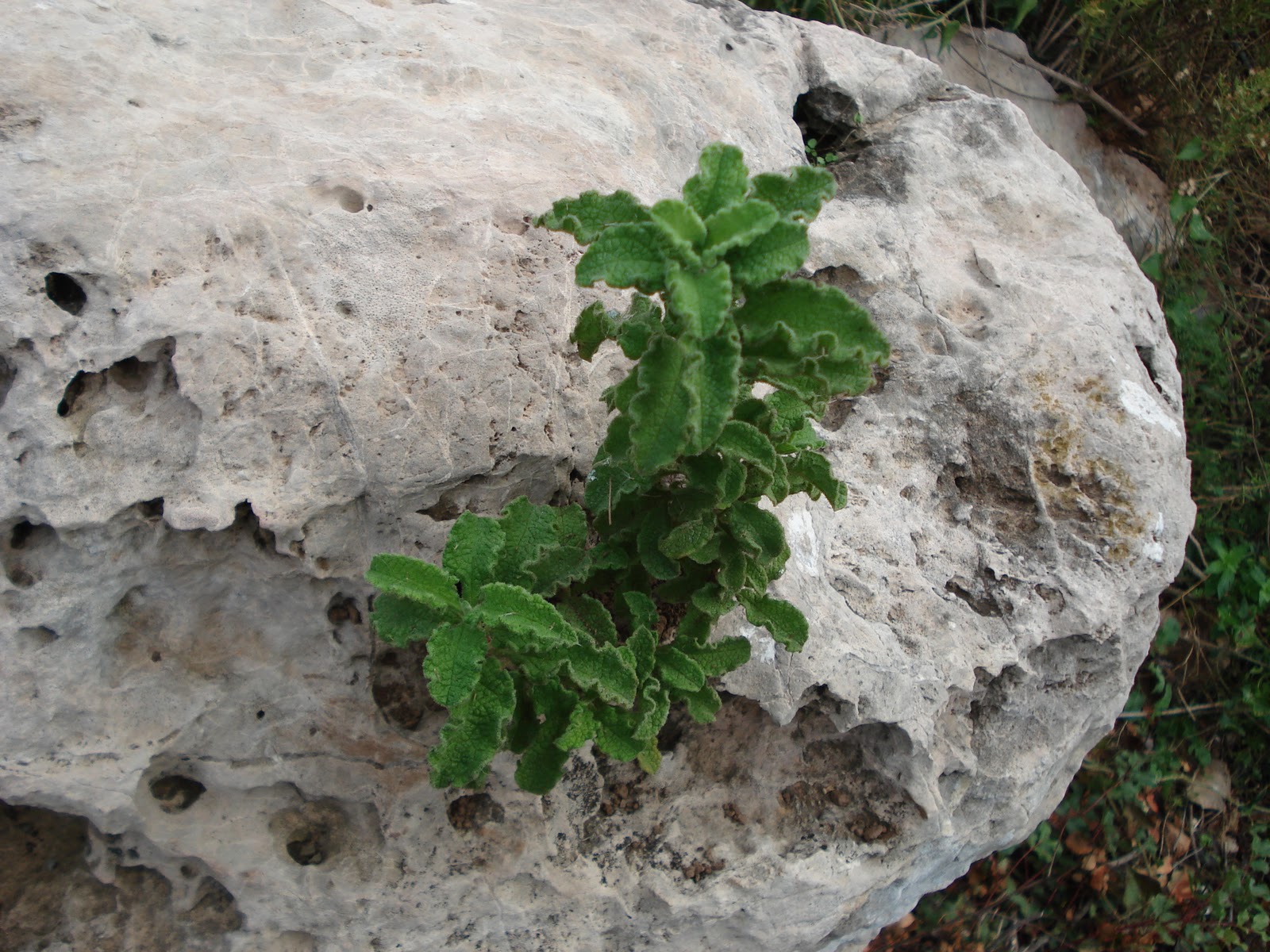
Cistus Creticus on Rock.
Pink Rock Rose; aka:

Hairy Rockrose, Gum Cistus,
Grey Rockrose,
European Rock Rose,
or, Balm of Gilead"


In this refulgent summer it has been a luxury to draw the breath of life. The grass grows, the buds burst, the meadow is spotted with fire & gold in the tint of flowers. The air is full of birds, & sweet with the breath of the pine, the balm-of-Gilead, & the new hay. Night brings no gloom to the heart with its welcome shade." -Ralph Waldo Emerson(1803-1882)

The evergreen subshrub Cistus incanus creticus is a native of southern Europe & northern Africa, commonly listed with its subspecies name given as a cultivar name, C. incanus "Creticus," while a few botanical experts have regarded it as its own species, C. creticus.

It's extremely heat-hardy but does not suffer in the lower temperate climate of Puget Sound so long as it is in soil with sharp drainage. It is cold-hardy to 10 or 15 degrees F., so long as chilly periods are not extended. It tolerates salt spray, wind, & extremely droughty conditions.
In our small city, it has been planted all along one of our major streets, & is commonly seen along other local roadsides. Starting late spring with reblooms throughout the summer it is very flowerful.
Cistus Creticus on Rock!!
I love the wild Pink Rock Rose but probably would never have planted it since it's already common enough from the city's own plantings. But there were two clumps of it growing up near the house when we first bought the place. With some regret in retrospect, I dug up both clumps & composted them, as one had spread into a doorway & was blocking access, & the other was in an ideal location for a shrub I liked better. In retrospect I should've moved them to the roadside, but as popular wisdom is they don't transplant well when they are old, I decided not to try that. I've since found rock roses to be far hardier than I was advised.

One of those initial two clumps had a bit of root remaining behind, & it regenerated a new shrub. Curiously this location is very shady due to a giant forsythia overshadowing it, plus the arbor I built around the side-door of the house. Rockroses ordinarily need so much sunlight I would not have thought it possible for one to thrive in such a poor location, but it has grown through one side of the arbor & into as much light as it can get, & gets on well enough to bloom well.

Sometimes called "Hairy Rockrose" because of its pubescent stems, it is not a thorned rose, nor even in the rose family. It forms a low-growing shrub of wavy grey-green leaves over which pink flowers with yellow hearts become very numerous. Each flower lasts but a day, but it produces so many consecutive buds that it is continuously in flower for weeks on end.

It is also known as Gum Cistus because the sticky stems exude a resin called Ladanum or Labdanum used as an expectorant, for skin ailments, & for other medicinal purposes. Ladanum has balsamic adhesive qualities making it useful in healing plasters. It burns cleanly with the odor of ambergris so has been used in ages past as a sacred incense.
This resinous "balm" led to this plant being regarded throughout its native range of Spain, Italy, & Greece as one & the same with the biblical "Balm of Gilead." For a discussion of its mythology & biblical associations, see the separate article on The Balm of Gilead.

http://www.paghat.com/cistuscreticus.html

15.8.04

Labdanum Resin


Description: Labdanum resin originates from the rockrose bush, which exudes a resinous dark brown mass from its leaves and twigs. To this day it's still gathered by driving goats into the thick forests overgrown with rock rose bushes. The goats eat their fill from the branches and the sticky resin gets stuck on their beards and hides. When they return, their owners carefully comb the resin off each goat. Also used is a rake-like instrument with long strips of leather attached to it, which they drag across the bushes to collect the resin.

Labdanum has fascinated peo ple for many centuries.Ancient Egyptians used it in their Kyphi incense mixtures and the Hebrews burned it in their temples. It's said to reach deep into our subconscious and bring back memories, feelings, and moods.

Labdanum is widely treasured in the perfume industry as a fixative and ambergris substitute. It's also used in the leather trade to add aroma to hides.

Family: Cistaceae

Synonyms: Rock Rose resin, Sun Rose resin

Parts Used: oleo gum resin

Aroma Description: very complex - rich, balsamic, woody, earthy, marshy, smoky, ambergris, leathery, sweet, flowery, honey, mint fragrance with hints of plum or oak moss after a rain.

Emotional Attributes: strengthening, creativity, relaxation, meditation, sensuous, love

Cosmetic Uses: perfumery, aromatherapy

Culinary Uses: commercial food flavoring for baked goods, soft drinks, ice cream, and candy.

Medicinal Attributes: stimulant, expectorant, with anti-biotic effects. Used to treat diarrhea, and excess mucus.

Element Association: Fire

Magical Associations: spirituality, protection, courage

Astrological Association: Libra, Scorpio, Cancer

Planetary Association: Moon, Mars, Jupiter

Season: Summer, Autumn

Aromatic Note: Base note

Essential Oil: Yes, steam distilled. An absolute is also available, extracted using solvents and alcohol. Labdanum oil, also called Cistus oil, is a very important fixative oil for the perfume industry and also provides them an ambergris and musk oil replacement or enhancer. A different Cistus oil is made from the leaves of the same plant.

Mixes Well With: amber, bay laurel, calamus, cardamom, chamomile, copal-black, iris root, lavender, musk seed, nutmeg, oakmoss, opoponax, patchouli, rosemary, rose, saffron, sandalwood, spikenard, storax, tolu balsam, turmeric, etc.

Incense Use Tip: Use rubber or latex gloves!!! This resin is soft, sticky, and tar-like. It's much easier to use if it's first frozen. Freeze the resin for 1 hour or longer to harden it for grinding in a mortar and pestle. You can also carefully use a knife to shave pieces off the edges of the frozen resin.

A seldom used alternative is to warm the labdanum resin to a pour-able state, which enables you to drizzle it into a loose incense mixture. Warm it by placing labdanum resin in a glass jar, seal it and sit the jar in hot water until resin is more liquid-like and pour-able. A double-boiler may be required.

In either case, we highly recommend using rubber or latex gloves and a well covered disposable work area for easy cleanup of this very sticky resin. It can create quite a sticky mess!

8.8.04

Laudanum # than ladanum,labdanum)


Laudanum


LAUDANUM, originally the name given by Paracelsus to a famous medical preparation of his own composed of gold, pearls, &c. (Opera, 1658, i. 492/2), but containing opium as its chief ingredient. The term is now only used for the alcoholic tincture of opium (q.v.). The name was either invented by Paracelsus from Lat. laudare to praise, or was a corrupted form of "ladanum" (Gr. X 5avov, from Pers. ladan), a resinous juice or gum obtained from various kinds of the Cistus shrub, formerly used medicinally in external applications and as a stomachic, but now only in perfumery and in making fumigating pastilles, &c.

21.6.04

Cistus Creticus /Cistus Incanus /Rose of Sharon

“I am the rose of Sharon, and the lily of the valley” (Song of Solomon 2:1).


“I am the rose of Sharon, and the lily of the valley” (Song of Solomon 2:1).
In ancient times, the gum that exudes from this plant was collected from the hair of goats that had browsed among the bushes.

Cistus has been studied for its effect on cell regeneration.

Action: Anti-infectious, antiviral, antibacterial, powerful anti-hemorrhaging agent helps reduce inflammation.

Traditional Uses: Cistus is also known as “rock rose” and has been studied for its effects on the regeneration of cells.

Indications: Bronchitis, respiratory infections, coughs, rhinitis, urinary infections, wounds, and wrinkles.

Historical Uses: Coughs, rhinitis, and may strengthen and support the immune system (due to phenol action).

Emotional Uses: Cistus may affect the upper part of the brain. It may also help quiet the nerves and calm the insomniac.

Other Uses: Cistus may strengthen and support the immune system (due to phenol action).

20.5.04

Cytinus Hypocistis

Cytinus Hypocistis

FAMILY RAFFLESIACEAECytinus hypocistis L.This peculiar, chlorophyll-free plant with its blindingly red colour grows as a parasite on the roots of ladania. It has red fleshy leaves that cover each other in succession. The flower has 4 petals, white or yellow, covered by the leaves, in dense heads, the outer flowers being male, the inner ones female. The name hypocistis originates from Dioscurides. Cytinus belongs to the same family as Raflesia, a tropical plant whose flower is the largest in the world with a diameter of 1 metre.Distributed 5-lOcm

Cytinus Hypocistis out of earth.

17.5.04

Aromatherapy

Labdanum
A Complete Guide To The Healing Art
© Kathi Keville, Mindy Green
(Excerpted from Aromatherapy, Crossing Press)
Cistus Creticus - Cistus Incanus - RockRose - Rose of Sharon
Native to Spain and Greece, this is the "rockrose" grown in some North American gardens. Possibly the Bible's onycha and "rose of Sharon" (Song 2:1), it often replaces ambergris. It has long been popular in Spain, which remains the major producer today. Shepherds in ancient Crete would drive their herds through the plants so the sticky gum would collect on the animal's coats; after combing it out, they'd take the gum to market. Don't confuse this plant with laud-anum, an old-time pain remedy made of opium.
Family: Cistaceae
Extraction: Leaves and twigs are boiled and the resin skimmed off, then aged to produce resinoid and absolute with a warm, spicy, balsamic odor. A fixative.
Medicinal Action: Labdanum is a nervous-system sedative, used in the treatment of rheumatism, colds, coughs, menstrual problems, cystitis and hemorrhoids.
Cosmetic/Skin Use: Antiseptic to wounds, acne, dermatitis and boils.
Emotional Attribute: Labdanum is both emotionally elevating and grounding. It improves meditation and intuition, and raises consciousness. It calms the nerves and promotes sleep, yet is also an aphrodisiac.
Associated Oils:
Cistus (C. incanus) --An essential oil with a lighter, more pungent odor distilled from the gum. Cistus (Helianthemum canadense)-This oil, distilled from a plant called frostwort, is also called cistus. It is used for skin problems and precancerous skin conditions.

http://www.healthy.net/scr/mmedica.asp?MTId=4&Id=47